Daily routine game: what comes next?
Put the pictures of the day in order: what do we do first, and what comes next? Tap the cards one by one. A gentle hint appears if you need it.
Daily routine in order
Tip for grown-ups
Connect the game to real life: after playing, do the first step of the routine together.
How to use it, step by step
- Talk about your own routine first: “What do you do when you wake up?”
- Let the child tap the first card. Say the step out loud together.
- If the child taps a different card, the game shows a calm hint. Give the child time before you help.
- Afterwards, use the printable visual schedule with the same pictures at home or in class.
📚 Which research is this based on?
Breaking a routine into small, ordered steps is called task analysis, an evidence-based practice described in the AFIRM Task Analysis module and the NCAEP 2020 report. The hint that appears after a mistake follows the idea of prompting from the AFIRM Prompting module. This is a learning game, not a therapy programme.
- AFIRM: Task Analysis: AFIRM, FPG Child Development Institute, UNC: Task Analysis module.
- AFIRM: Prompting: AFIRM, FPG Child Development Institute, UNC: Prompting module.
- AFIRM: Visual Supports: AFIRM (Autism Focused Intervention Resources and Modules), FPG Child Development Institute, UNC: Visual Supports module.
Also try
- Browser gamePicture match
Find the same picture. One clear task at a time, no timer and no losing.
- Printable PDFVisual schedule
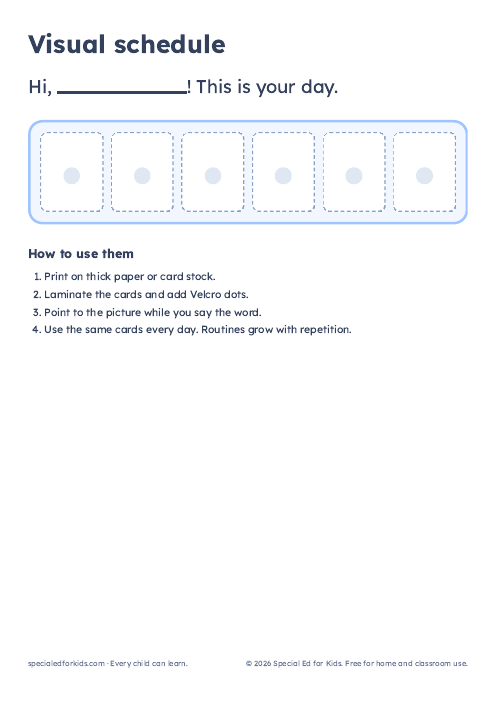
Picture cards for the daily routine, from waking up to bedtime, plus blank cards to draw your own.
- Printable PDFFirst-then board
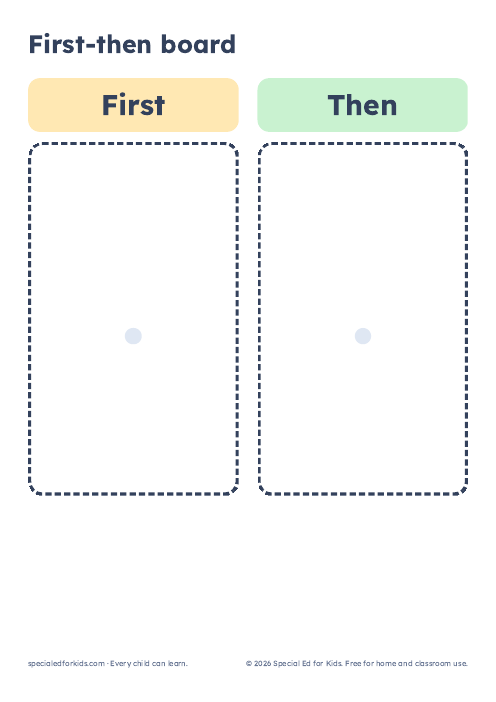
Two boxes: first the task, then something the child enjoys.
- Printable PDFToken board
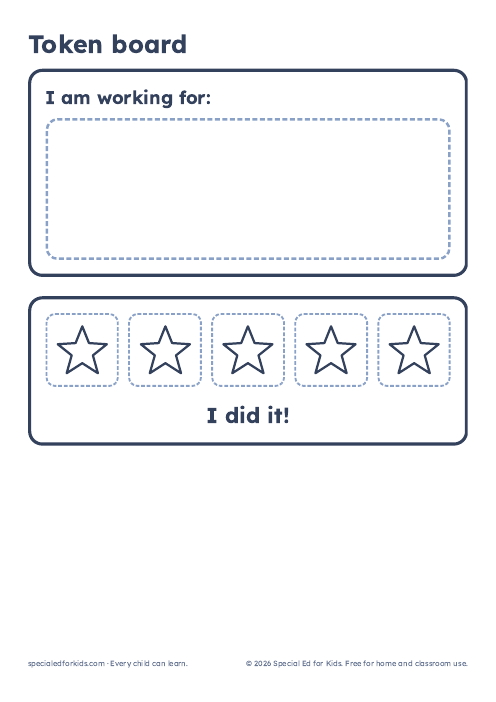
The child earns five stars, then gets the reward they chose.